
Before anything else: stop the damage
A claim starts with the loss, not the paperwork. Shut off the water, make the area safe and begin removing standing water. Most policies put a duty on the homeowner to keep the damage from growing, and delay can become its own problem.
Then pick up your phone and take pictures. The next ten minutes of photographs are worth more than anything you will write later.
Step 1: photograph everything, wet
- The source: the split pipe, failed hose, tank or point of entry
- Each affected room, wide shots first and then close-ups
- Water lines on walls and furniture
- Flooring, baseboards and the bottom of doors
- Damaged contents, with brand and model labels where they exist
- Ceilings below the leak
Shoot video as well, walking slowly through the house and saying the date and room out loud. Do this before the water is extracted if it is safe to do so.
Step 2: call your insurer and write down the claim number
Report the loss as soon as the emergency is under control. Ask four questions and note the answers with the name of the person and the time.
- What is my claim number?
- What is my deductible for this type of loss?
- May I begin drying and removing wet materials now?
- What do you need me to keep for the adjuster?
Insurers nearly always say yes to emergency mitigation. Getting that yes on record avoids arguments later.
Step 3: keep the evidence
Do not throw away the failed part. The burst connector or cracked valve shows the loss was sudden. Put it in a bag with the date.
Keep samples of removed materials if asked, such as a square of carpet and pad. Keep damaged contents until the adjuster has seen them or approved disposal from photos. If something must go for health reasons, photograph it first.
Step 4: get the loss measured
This is where a restoration company adds to the file. Moisture meters and thermal imaging show how far the water went. That map supports the scope of work.
| Document | Who creates it | Why it matters |
|---|---|---|
| Initial photos and video | You | Shows the loss before cleanup |
| Moisture map and daily drying log | Restoration crew | Shows what was wet and when it was dry |
| Itemized scope of work | Restoration crew | Lists each task and material |
| Contents list | You | Supports the personal property part of the claim |
| Receipts for emergency costs | You | Supports reimbursement requests |
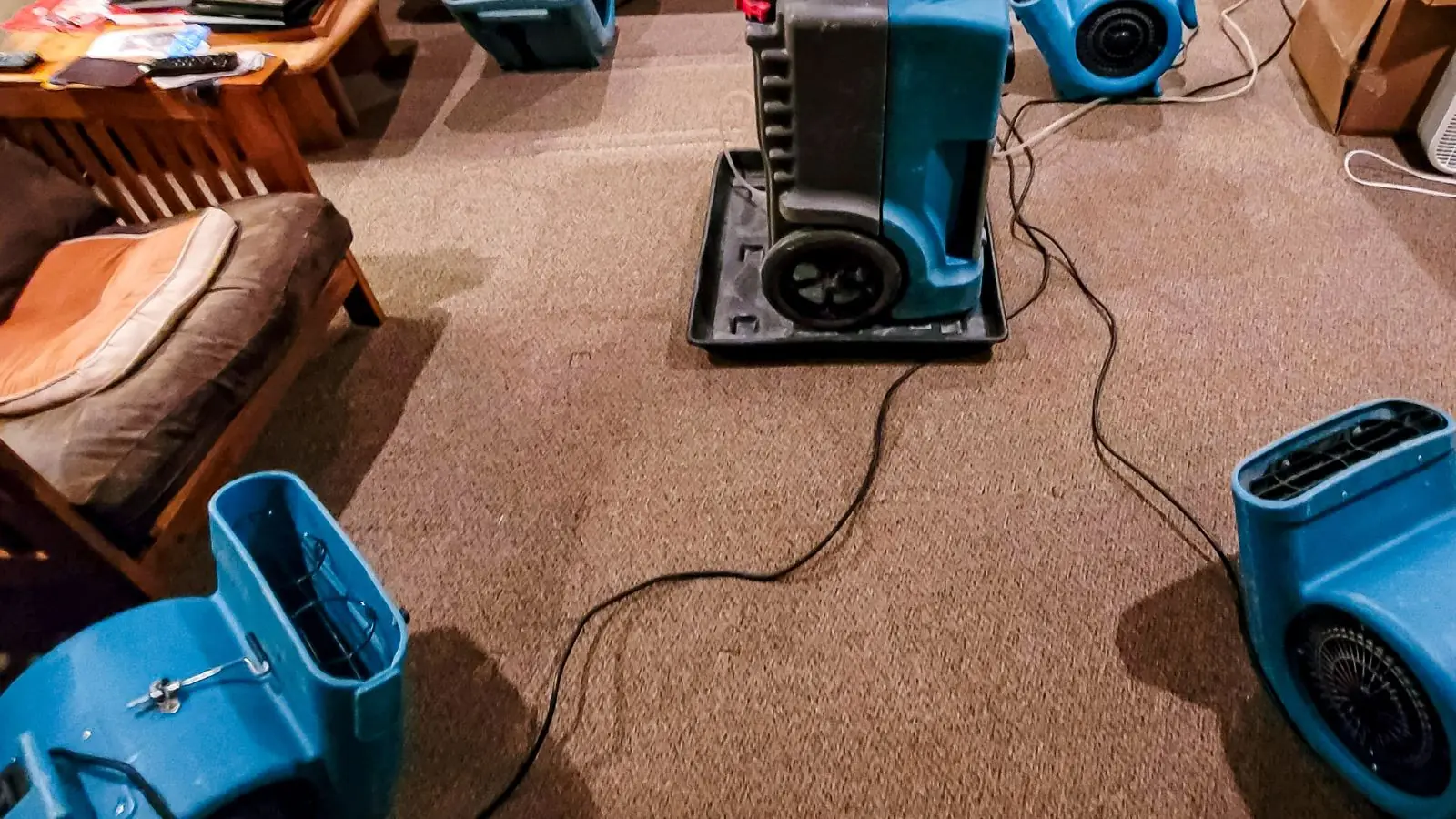
The drying log matters more than people expect. It is the proof that equipment was needed for the days it ran. Our water extraction and drying crews record it daily.
Claim notes specific to Maryland Heights
Large storms create claim backlogs. On July 26, 2022, the National Weather Service recorded 8.64 inches of rain at Lambert, a daily record for St. Louis, with 10.35 inches measured a mile southeast of Maryland Heights. After an event like that, adjusters are stretched across thousands of homes. Your own photos and logs keep your file moving while you wait.
Rebuild work may need a permit. The city's Building Division lists basement finishes and kitchen or bath remodels among projects that generally require one, under the 2021 International Code Council family of codes. The Permits Coordinator can be reached at (314) 738-2240. Permit fees and code-required upgrades are worth raising with your adjuster.
The same documentation habits apply if you own property in Hazelwood or Florissant, where the 2022 storm also caused widespread water losses.
Step 5: build the contents list
Go room by room. For each item write what it is, roughly when you bought it and what you paid if you remember. Receipts, bank statements and old photos of the room all help.
Do not skip small things. A basement shelf of ordinary household goods adds up quickly. Group them sensibly instead of listing every item on its own line.
Step 6: meet the adjuster
Walk the loss with them. Point out everything that got wet, including rooms that now look fine. Hand over your photos, the moisture map and the scope.
If the adjuster's estimate and the contractor's scope differ, ask both to go through the differences line by line. Most gaps are about quantities or about a task one side left out, such as the days of structural drying the readings called for. They are usually resolved with a conversation and a few photos.
Keep a simple claim diary as you go: who you spoke to, on what date, and what was agreed. It takes a minute per call and settles most later disagreements.
We cannot negotiate your claim or promise an outcome. We can explain our scope to the adjuster and answer technical questions about the drying.