
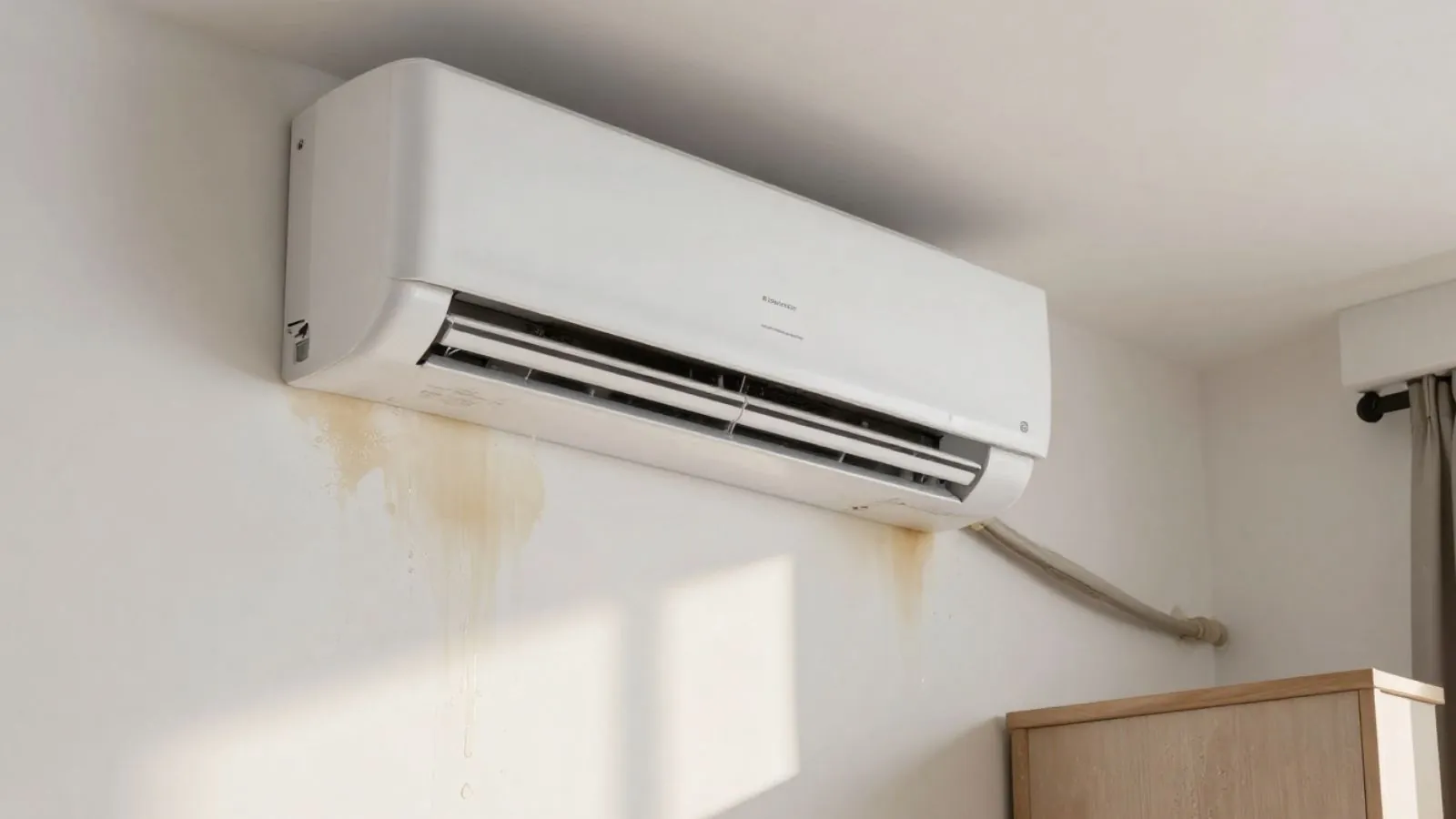
How an air conditioner damages a house
AC leak water damage is caused by condensate, the water an air conditioner pulls out of indoor air. On a humid day a central system can produce several gallons. That water is supposed to run down a drain line. When the line clogs or the pan under the coil cracks, it overflows into whatever is below.
In Maryland Heights that is usually a hall closet, a basement ceiling or an attic platform. Our job is the water damage repair after your HVAC technician clears the drain. Call (833) 521-1033 to have the area inspected.
Signs of a condensate leak
- A stain on the ceiling or wall next to the air handler or a return vent
- Carpet that is damp in a closet beside the furnace
- Wood floor boards cupping near the unit in summer
- A musty smell that appears when the system runs
- Rust streaks or water in the secondary drain pan
Hardwood cupping from a condensate line is one of the more common summer calls we hear about. The boards nearest the air handler lift at the edges because moisture is coming up from below. For that symptom, read hardwood floor water damage repair as well.
Why it goes unnoticed
A condensate leak is measured in drips. It only runs when the AC runs, it stops overnight when the system cycles less, and the stain it leaves dries between cycles. Homeowners often repaint the spot once or twice before looking for the cause.
By then the insulation, the back of the drywall and sometimes the framing have been wet repeatedly for a season. St. Louis summers are humid enough that systems run for long stretches, though we do not have a local figure for how often drains fail. Check yours each spring.
How we repair AC leak damage
- Confirm the source is fixed. We ask that the drain line and pan are cleared or repaired by an HVAC technician first.
- Map the moisture. Moisture meters and thermal imaging show the full wet area, including inside the closet walls.
- Remove damaged material. Stained, crumbling or moldy drywall and wet insulation are taken out.
- Dry. Air movers and an LGR dehumidifier dry the framing and subfloor.
- Repair. Drywall, texture, paint, and flooring where needed.
Because these leaks are slow, we check for growth on the hidden side of the drywall before closing anything. If we find it, the work follows mold remediation practice with containment.
Repair options and honest trade-offs
| Situation | Lighter option | Fuller option |
|---|---|---|
| Small dry stain, drain already fixed | Meter check, stain block, repaint | Replace the stained panel |
| Damp drywall, no visible growth | Dry in place, then repair finish | Remove and replace the wet section |
| Repeated wetting, odor or growth | Not recommended | Remove, contain, clean framing, rebuild |
Drying in place costs less but only works when the drywall is still sound. If it has gone soft or been wet many times, replacement is the repair that lasts. We tell you which case you have and why.
Cost factors and insurance
- How long the leak has been going
- Whether the unit is in an attic, closet or basement
- Drywall, insulation and flooring to be replaced
- Any mold cleanup required
Insurers often treat a sudden overflow differently from a leak that ran all summer. Long-term seepage is commonly excluded. Ask your insurer before assuming. Price and plan are talked through with you first.
Describe the stain and where your air handler sits. We will tell you what an inspection involves.
Call (833) 521-1033Serving Maryland Heights and nearby towns
We repair AC leak damage in Maryland Heights, ZIP 63043, and in Hazelwood, Earth City, Bridgeton, Saint Ann and Florissant. Our Florissant page covers that city's older ranch homes.
When the leak is above a finished room, the steps on our ceiling repair page apply too.