
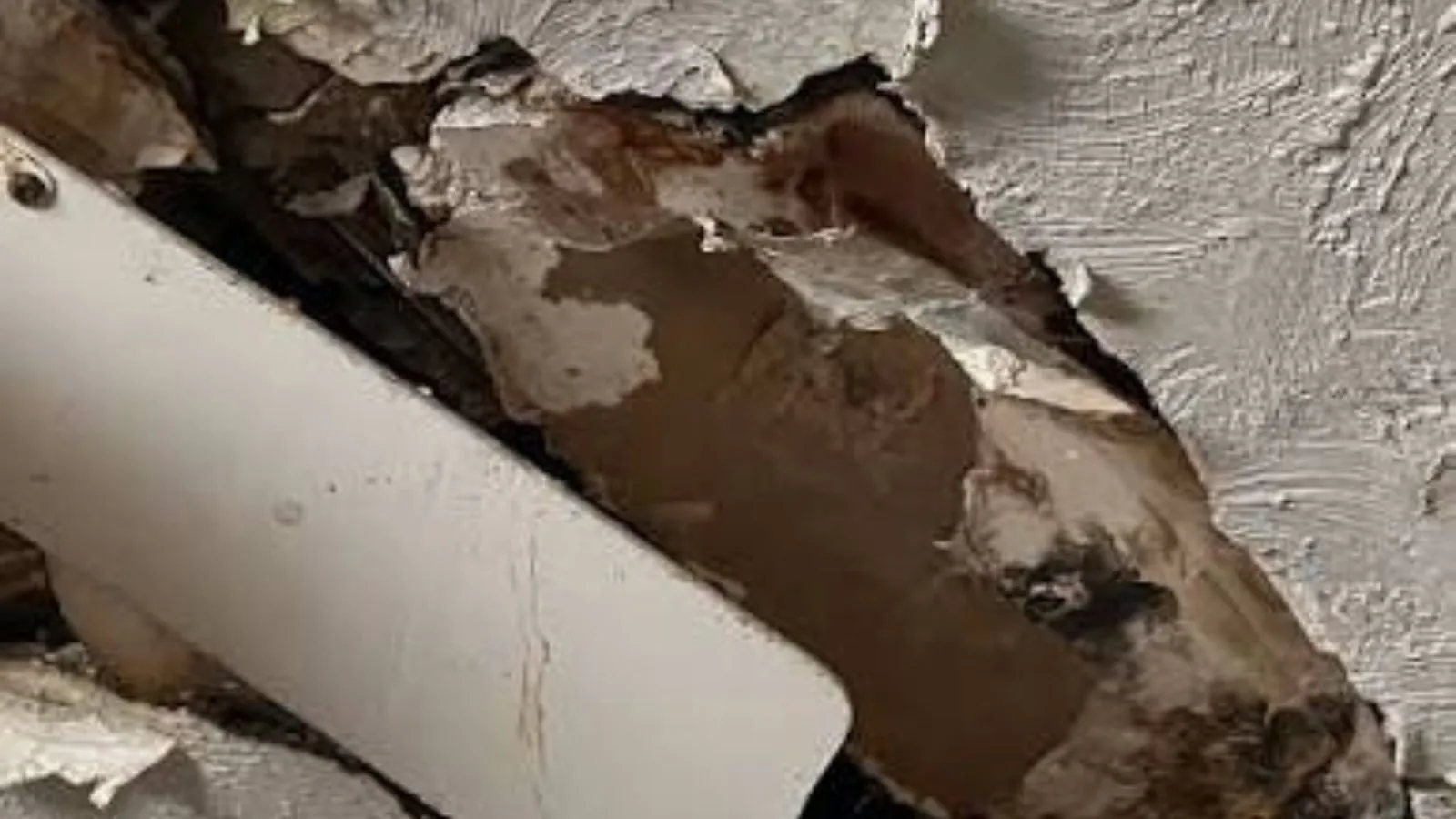
What a wet wall looks like
Wall and drywall water damage repair means drying the wall cavity, removing drywall and insulation that cannot be saved, and rebuilding the surface. Drywall is gypsum between two sheets of paper. It draws water upward like a wick and goes soft when saturated.
The signs are a stain, paint that bubbles, a baseboard that swells or pulls away, or a patch that gives when you press it. If you have found one in your Maryland Heights home, call (833) 521-1033 for an inspection.
Signs by location
| Where you see it | Likely source | First check |
|---|---|---|
| Base of a wall, swollen baseboard | Floor-level leak or water that ran under the plate | Flooring and the next room |
| Middle of a wall, soft spot or hole forming | Supply or drain line inside the wall | Fixtures on the other side |
| Top of a wall, streaks from the ceiling line | Roof, attic or the floor above | Ceiling and attic |
| Exterior wall under a window | Window or siding leak | Outside caulk and flashing |
Garage drywall is a frequent one. So is a master bathroom wall shared with a closet, and a kitchen wall soaked from outside by a siding leak. Streaks that start at the ceiling line belong with ceiling water damage repair.
Why the stain is smaller than the damage
Water inside a wall spreads along the bottom plate and soaks the insulation. The paper face you can see is the last layer to show it. By the time there is a stain, the back of the board and the framing have usually been wet for some time.
Most local housing is from the 1960s and 1970s, and the city counts a smaller share, 8.7 percent, from 1940 to 1959. Houses from the older end of that range may have plaster or early gypsum board, which dries more slowly than modern drywall and needs a different patching method.
A thermal imaging camera and a moisture meter show the real wet area in a few minutes, without opening anything.
How a water damaged wall is repaired
- Find and stop the source. A plumber, roofer or siding contractor fixes it. We confirm the wall is no longer being wetted.
- Map the moisture. Meters outline the wet section on both sides of the wall.
- Open or dry in place. Baseboard comes off. Sound drywall is dried through small holes at the base. Soft, swollen or contaminated drywall is cut out in a straight line.
- Dry the cavity. Air movers and LGR dehumidifiers dry studs and plates until they read normal.
- Rebuild. New insulation and drywall, tape, mud, texture match, primer, paint and trim.
Damage is assessed before new materials go in. Closing a wall over damp framing is the most common shortcut in this trade, and it is the one that brings people back with a mold problem.
Patch, section or full wall
A small patch is right for a clean leak caught early, where only a square foot or two went soft. It is the least disruptive and blends well on a smooth wall.
Replacing a horizontal section, often the bottom two to four feet, is typical after floor-level water. Seams fall at a consistent height and are easier to finish. A full wall is replaced when damage runs top to bottom or when texture cannot be matched in a patch. Paint is the catch in every case, because touching up one area of an aged wall usually shows. Plan on painting corner to corner.
Baseboards and trim
Water damage on baseboards is often the first thing people notice. MDF baseboard swells and has to be replaced. Solid wood trim can frequently be dried, refastened and repainted.
Behind every swollen baseboard is a wall bottom that needs checking. If the flooring next to it is wood, see hardwood floor repair. If the water came from a pipe in that wall, burst pipe cleanup covers the first response.
Cost factors and insurance
- Linear feet of wall and height of the cut
- Insulation replacement
- Texture matching and how much has to be painted
- Drying days before the wall can be closed
- Whether mold cleanup is needed
Sudden leaks are often covered, including repainting to match. Long-term seepage is a different story with most insurers. Read your policy or put the question to them. You get one scope covering drying and repair, You get a plain explanation of the job and its price beforehand.
Tell us where on the wall the damage is and what is on the other side.
Call (833) 521-1033Wall repair area
We repair water damaged walls in Maryland Heights and ZIP code 63043, and in Hazelwood, Saint Ann and Bridgeton, as well as Florissant and Earth City. Homeowners near Gentry Park can start from the Bridgeton page.