
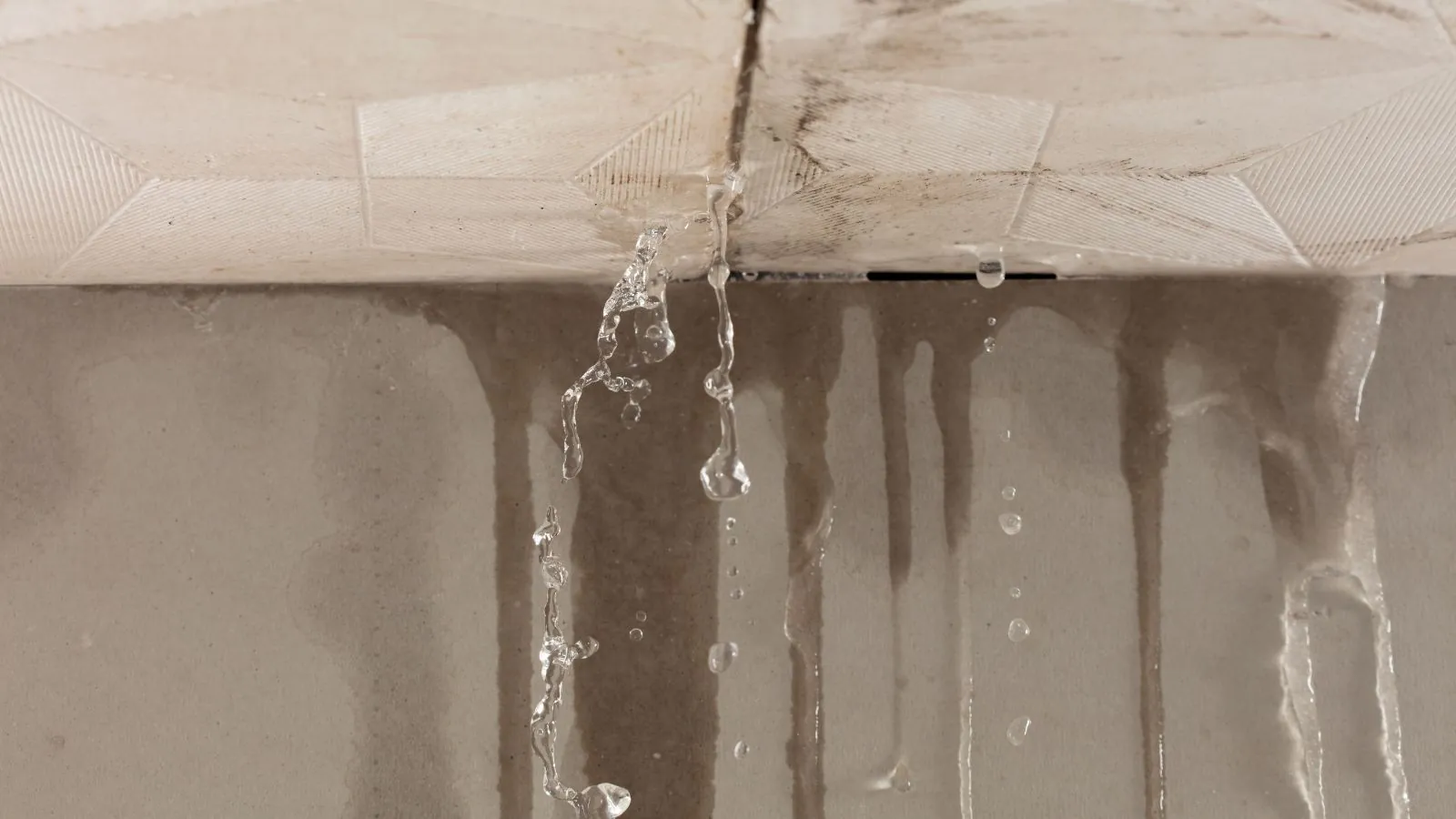
Storm water comes in from above and from the sides
Storm water damage is rain that enters through the building envelope after wind, hail or a fallen limb has opened it. It is different from flooding, where water rises from the ground. If a storm has just let water into your Maryland Heights home, call (833) 521-1033. We answer 24/7.
Stay inside until lightning and high wind have passed. Keep clear of rooms where the ceiling is sagging. Move belongings away from the leak and put down buckets and towels.
If a tree or wire is on the house, or water is near the electrical panel, call 911 or Ameren before you call us.
After the storm: what to do while rain is still getting in
- Photograph the damage inside and out before moving things
- Catch drips and relieve small ceiling bubbles into a bucket if safe
- Do not climb onto a wet or damaged roof
- Pull wet rugs and cushions off wood floors
- Call the 24/7 line and describe where water is entering
Storms do not keep office hours, and neither does the damage. Crews take after-hours storm calls and begin with extraction and containment inside. A roofer handles tarping and the roof itself.
What storms have done here
Two events show the range. A tornado struck Maryland Heights in 2011, and the city temporarily amended its zoning code afterward so that damaged homes could be rebuilt without penalty. That is wind damage: roofs opened, windows broken, rain following straight in.
On July 26, 2022, the problem was volume. Lambert airport logged 8.64 inches, which the National Weather Service lists as the wettest calendar day in St. Louis records, and a volunteer observer measured 10.35 inches a mile southeast of Maryland Heights. Rain that intense finds every weak flashing and overwhelms gutters, so water runs down inside walls.
Roofs on 1960s and 1970s houses, which make up most of the city's housing, have usually been replaced at least once. Flashing around chimneys and vents is where they tend to let go first.
How storm water damage is cleaned up
- Make safe. Check for electrical hazards and unstable ceilings.
- Extract. Remove standing water from floors and carpet with extraction units.
- Remove wet insulation. Attic and wall insulation soaked by rain is taken out so framing can dry.
- Dry. LGR dehumidifiers and air movers go in, and daily readings from moisture meters and a thermal imaging camera follow each wall, ceiling and floor.
- Repair. Drywall, paint, trim and flooring once the building is dry and the exterior is sealed.
The order matters. Interior repairs wait until the roof or window is fixed, or the next rain undoes them.
Storm, flood or roof leak?
| What happened | Where it belongs | Why it matters |
|---|---|---|
| Wind or hail opened the roof or a window | Storm water damage, this page | Usually handled as a wind or hail claim |
| Water rose from the yard, creek or through the floor | Flood damage cleanup | Contaminated water, separate flood policy |
| Old roof drips in ordinary rain | Ceiling water damage repair | Often seen as wear, not a storm loss |
Insurers draw these lines carefully, so we record how the water got in with photos of the entry point.
Cost factors and insurance
- How many rooms and levels took water
- Amount of wet insulation and drywall
- Flooring affected
- Drying days, which run longer in humid weather
Wind and hail damage, and the rain that enters through that damage, is often covered by a homeowners policy. Rising water is treated as flood, which usually needs a separate policy. Ask your insurer how your loss is classified. First comes the explanation of scope and cost, then the work.
Storm damage let water in? Tell us where it is entering and which rooms are wet.
Call (833) 521-1033Storm response area
We clean up storm water damage in Maryland Heights, ZIP 63043, and in Earth City, Florissant, Bridgeton, Hazelwood and Saint Ann. See the Hazelwood page for that city.
Water that ran down inside the walls is addressed under wall and drywall repair, and soaked rooms start with water extraction.