
Wet carpet is two problems
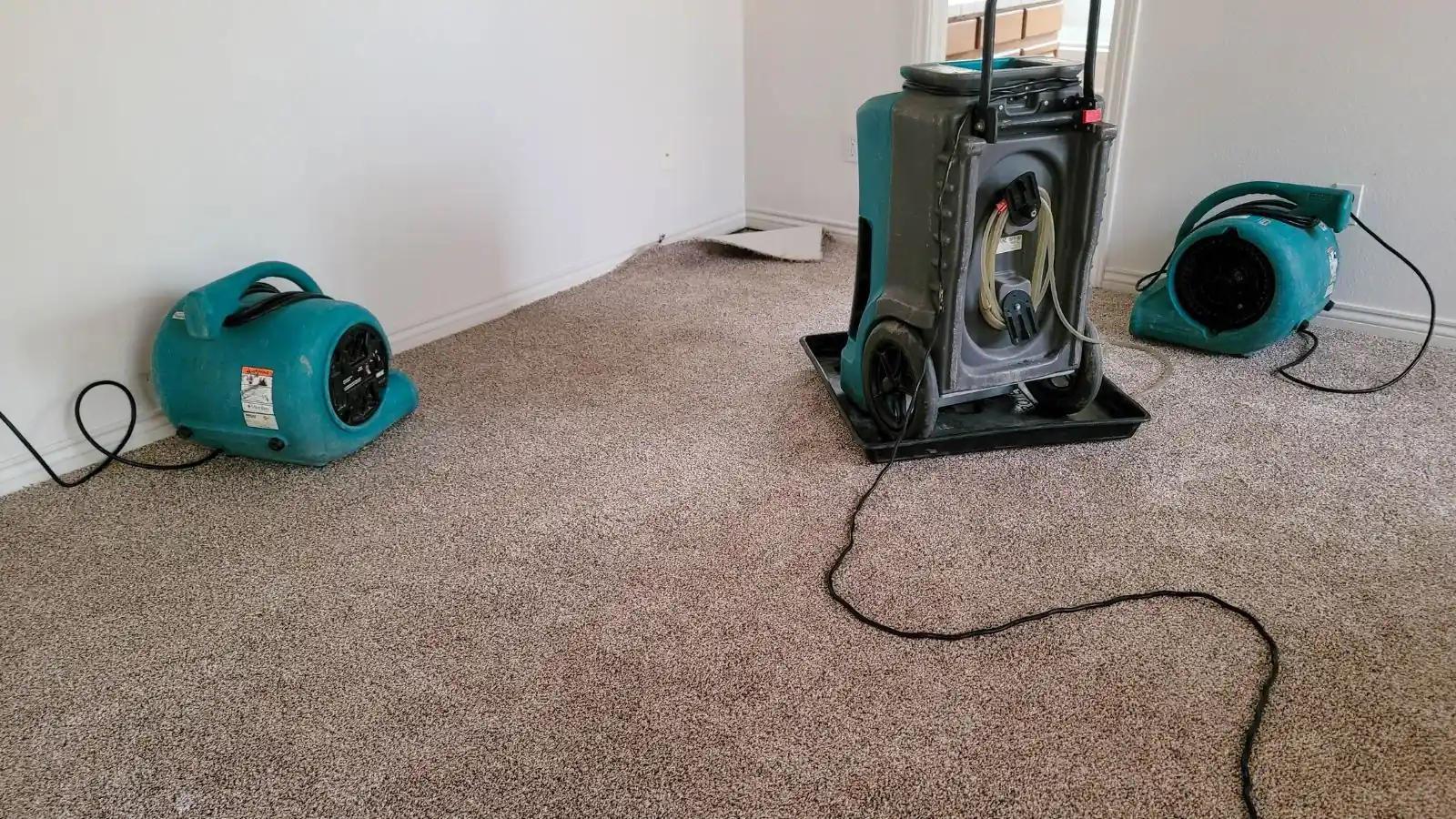
Carpet water damage restoration means extracting water from the carpet, dealing with the pad underneath, drying the subfloor, then cleaning and reinstalling. The carpet is the part you see. The pad is a sponge, and it is usually the bigger problem.
If your carpet in Maryland Heights is soaked, stay off it where you can, move furniture legs onto foil or blocks to prevent staining, and call (833) 521-1033.
Can it be saved? Three questions
| Question | Carpet can usually stay | Carpet usually goes |
|---|---|---|
| What was the water? | Clean supply water | Sewage or outside flood water |
| How long was it wet? | Under about two days | Several days, or odor has set in |
| What condition was it in? | Sound backing, firm seams | Old, delaminating or already stained |
Pad is judged more strictly. It is inexpensive and slow to dry, so it is often replaced even when the carpet is kept. After a sewage backup, both are removed without exception.
How wet carpet is restored
- Extract. Weighted extraction tools press and vacuum water from the carpet and pad.
- Lift. The carpet is released from the tack strip and folded back. Wet pad is cut out if it is not being saved.
- Dry the subfloor. Air movers and LGR dehumidifiers dry the concrete or wood below. Moisture meters confirm it.
- Float or dry flat. Air is directed under and over the carpet until it reads dry.
- Reinstall and clean. New pad goes down, the carpet is restretched, seams are checked, and the carpet is cleaned.
Carpet can shrink or its backing can separate if it stays wet too long. That is called delamination, and it cannot be repaired.
Where soaked carpet shows up locally
Callers describe a few repeating cases. A closet where the carpet and pad were soaked by a neighbor's sprinkler system. A finished basement after a water heater let go. A bedroom below an upstairs bathroom leak. And the one nobody wants: lifting a corner of old carpet and finding mold on the pad.
Maryland Heights has a large share of multi-family housing, and the city's plan describes most of it as garden-style apartments. In those buildings the unit above is a common source, and both units need checking. In single-family homes, carpeted lower levels are the usual location, which is why this page and basement water damage cleanup overlap so often.
What is under the carpet matters
Over a concrete slab, water spreads wide beneath the pad and the slab holds moisture for days. Over a wood subfloor, water can pass through to the ceiling below.
Older houses here sometimes have oak floors under the carpet. If you find wood when the carpet is lifted, see hardwood floor water damage repair before deciding what goes back down.
Tack strip and the base of the walls get wet too. Rusted tack strip is replaced, and drywall that wicked water is handled as described on our drywall repair page.
Restore or replace: the trade-off
Restoring keeps carpet that matches the rest of the house and usually costs less. It depends on clean water and prompt action.
Replacing is the right call for contaminated water, long soaks and carpet near the end of its life. Insurers generally pay to restore when that is possible, and to replace when it is not. One practical point: a new section will not match faded carpet in adjoining rooms, so ask about continuous areas.
Cost factors and insurance
- Square footage of wet carpet
- Water category
- Pad replacement and any tack strip
- Furniture and contents to move
- Drying days for the subfloor
Sudden leaks are often covered. Ground water through a foundation usually is not under a standard policy. Ask your insurer. The plan and the price come first, the equipment second.
Tell us what soaked the carpet and how long ago. That answers most of the question.
Call (833) 521-1033Carpet restoration area
We restore wet carpet in Maryland Heights and the 63043 ZIP code, and in nearby Saint Ann and Bridgeton, the Earth City business district, and both Hazelwood and Florissant. Apartment residents north of the airport can check the Hazelwood page.