
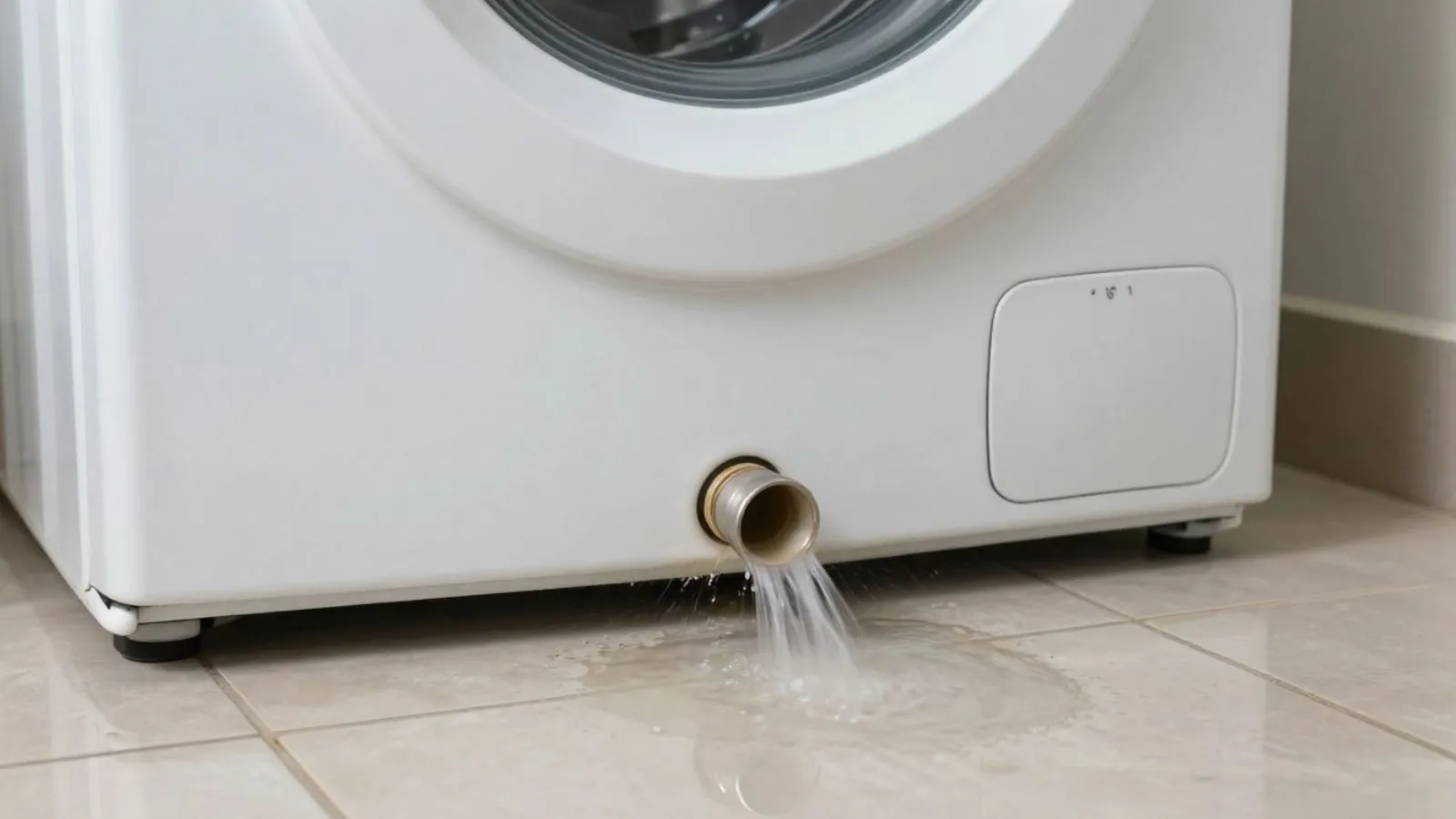
Small hoses, large floods
Appliance leak water damage comes from the supply or drain side of a washing machine, dishwasher or refrigerator. A washer supply hose is under full house pressure even when the machine is idle, so a burst hose behaves like a burst pipe. If water is spreading in your Maryland Heights home, call (833) 521-1033 any time, 24/7.
Close the valve behind or beside the appliance. For a washer, that is the pair of hot and cold taps in the wall box. If the valve will not turn, close the house main.
Unplug the machine only if the outlet and the floor in front of it are dry. Mop or towel the edges to keep water from reaching the next room while you wait.
Appliance leak emergency: when to call right away
- A supply hose or valve has failed and water is still running
- Water has moved under a wall into another room
- The laundry is on an upper floor and the ceiling below is wet
- Wood or laminate flooring is involved
A dishwasher that left a cup of water on the floor once is a repair call. A washer valve that ran unnoticed for an afternoon is a restoration call, and it does not improve by waiting until morning. We take both after hours.
Which appliance, which damage
| Appliance | Usual failure | Where the water goes |
|---|---|---|
| Washing machine | Supply hose, wall valve, drain hose pulled loose | Across the floor fast, into adjoining walls |
| Dishwasher | Door seal, drain line, supply connector | Under the unit and cabinets, into the subfloor |
| Refrigerator | Ice maker or dispenser line | Slow leak behind and under, often found late |
The refrigerator line is the quiet one. A pinhole in thin plastic tubing can drip behind the fridge for weeks, and the first sign is a soft spot or a cupped board in front of it.
Why this matters in Maryland Heights housing
About 55 percent of homes here were owner occupied and about 45 percent rented at the 2010 census, according to the city's own demographics page. That is a lot of apartments, condos and townhomes with laundry closets on upper floors, where a washer leak becomes a ceiling problem for the unit underneath.
In single-family ranch homes the washer often sits in the basement, and a leak there wets stored contents and any finished rooms nearby. Whichever layout you have, the first job is the same: stop the water and find out how far it travelled.
How appliance leak cleanup works
- Pull the appliance. We move it to reach the wet floor and wall behind.
- Extract. Extraction units lift standing water from hard floors, carpet and pad.
- Measure. Moisture meters and thermal imaging check subfloor, wall bases and the ceiling below.
- Dry. Air movers, LGR dehumidifiers and, for wood floors, drying mats that pull moisture up through the boards.
- Repair. Flooring, baseboard and drywall are replaced where they could not be dried.
Vinyl plank and laminate hide water well. It runs beneath the floating floor and sits on the subfloor. Lifting a few rows to check is routine. When the leak has reached the cabinets, kitchen water damage restoration picks up from there.
Cost factors and insurance
- How long the leak ran
- Flooring type under and around the appliance
- Whether a ceiling or a second unit below is affected
- Drying days and equipment
A sudden hose or valve failure is often covered by homeowners or renters policies. Damage from a leak that went on for months often is not. Check your policy or ask your insurer. If you rent, tell your landlord right away and keep your own photos.
Tell us which appliance and how long it leaked. Before we touch anything, you get the plan and the figure.
Call (833) 521-1033Service area
We clean up appliance leaks in Maryland Heights and the 63043 ZIP code, along with Earth City, Bridgeton, Florissant, Saint Ann and Hazelwood. The Hazelwood page has notes for apartment residents there.
If the ceiling below a laundry room is stained, read about fixing a water damaged ceiling. For water that reached a wall, see drywall and baseboard repair.