
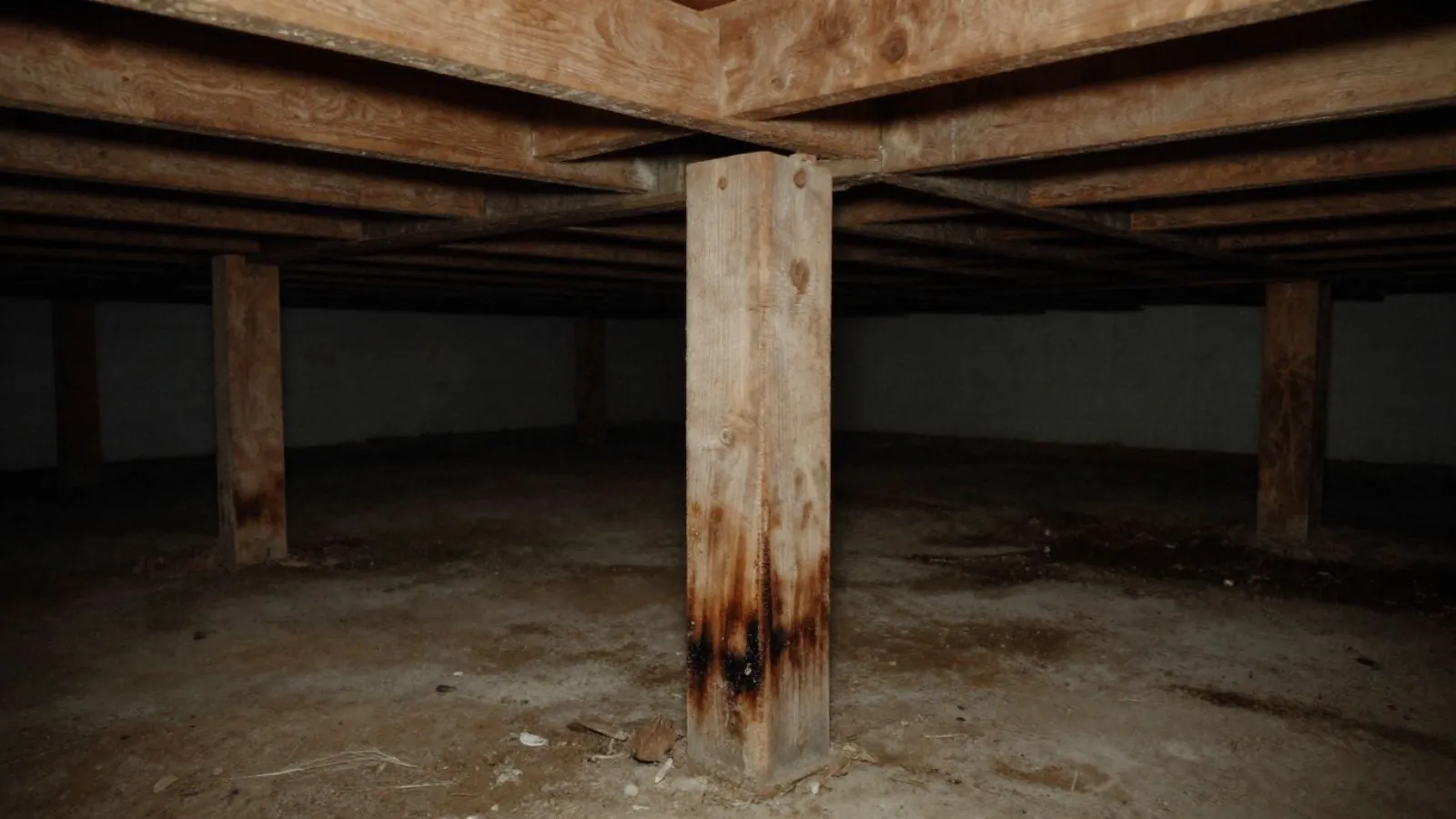
What water does under a floor
Crawl space water damage is moisture in the shallow void between the ground and the floor framing. Water there does not need to touch your living space to harm it. It soaks fiberglass insulation, raises the moisture content of joists and subfloor, and sends damp air up into the rooms above.
Not every Maryland Heights home has a crawl space. Where one exists, it is often under an addition, a sunroom or part of a split-level. If you have found water in yours, call (833) 521-1033 to arrange an inspection.
Signs upstairs that point downstairs
- A musty smell on the main floor that is stronger in humid weather
- Floors that feel cold, soft or slightly bouncy over one part of the house
- Insulation hanging down or lying on the ground under the floor
- Condensation or rust on ductwork and pipes in the crawl space
- Standing water or mud lines on the foundation walls
Most people only look when a plumber or cable installer tells them what is down there. If you can safely shine a light through the access hatch, look for hanging insulation first. It is the clearest sign.
Where the water comes from
There are three usual sources. Plumbing above or inside the crawl space can leak. Ground water can seep through foundation walls after heavy rain. And outside water can be directed in by grading, downspouts or, as one caller found, an irrigation system that backed up toward the house.
Maryland Heights has several creeks running through residential areas, including Fee Fee Creek and Dorsett Creek, according to the city's floodplain page. A home near one of those channels sees a higher water table after storms. During the July 2022 rain event the National Weather Service logged more than 10 inches nearby, the kind of total that fills low spots under houses.
A pipe that freezes and splits in a vented crawl space is covered on our frozen pipe water damage page.
How a wet crawl space is cleaned up
- Inspect and photograph. You see what we see before we recommend anything.
- Pump out. Standing water is removed with pumps and extraction units.
- Remove wet insulation and debris. Saturated batts and any soaked vapor barrier are bagged and taken out.
- Clean. Framing with surface growth is cleaned, with containment and HEPA filtration where needed.
- Dry. Air movers and LGR dehumidifiers, often ducted into the space, run until joists and subfloor read dry on a moisture meter.
Drying wood framing to a safe moisture content is the goal. New insulation or a vapor barrier should only go in after that, and after the water source has been dealt with.
What we do and what we do not
| Task | Us | Another trade |
|---|---|---|
| Pumping, cleanup and drying | Yes | |
| Removing wet insulation and barrier | Yes | |
| Cleaning growth from framing | Yes | |
| Fixing the leaking pipe | Plumber | |
| Regrading, drains, sump systems, encapsulation | Drainage or foundation contractor |
We would rather be clear about that boundary. Restoration fixes the damage. Keeping water out for good is drainage work, and we will tell you if that is what your house needs.
Cost factors and insurance
- Height and access, since tight spaces take longer
- Amount of standing water and mud
- Square footage of insulation to remove
- Whether framing needs cleaning for growth
- Drying days
A sudden pipe break in a crawl space is often a covered loss. Ground water seepage usually is not under a standard homeowners policy. Check yours or ask your insurer. You approve the scope and the price before the job starts.
Found water under the floor? Tell us how you get into the crawl space and what you saw.
Call (833) 521-1033Crawl space service area
We work under homes in Maryland Heights, ZIP 63043, and in Saint Ann, Earth City, Hazelwood, Bridgeton and Florissant. Details for homes west of the airport are on the Bridgeton page.
If the level below your main floor is a full basement instead, see basement water damage cleanup. Once any space is pumped out, structural drying finishes the job.