
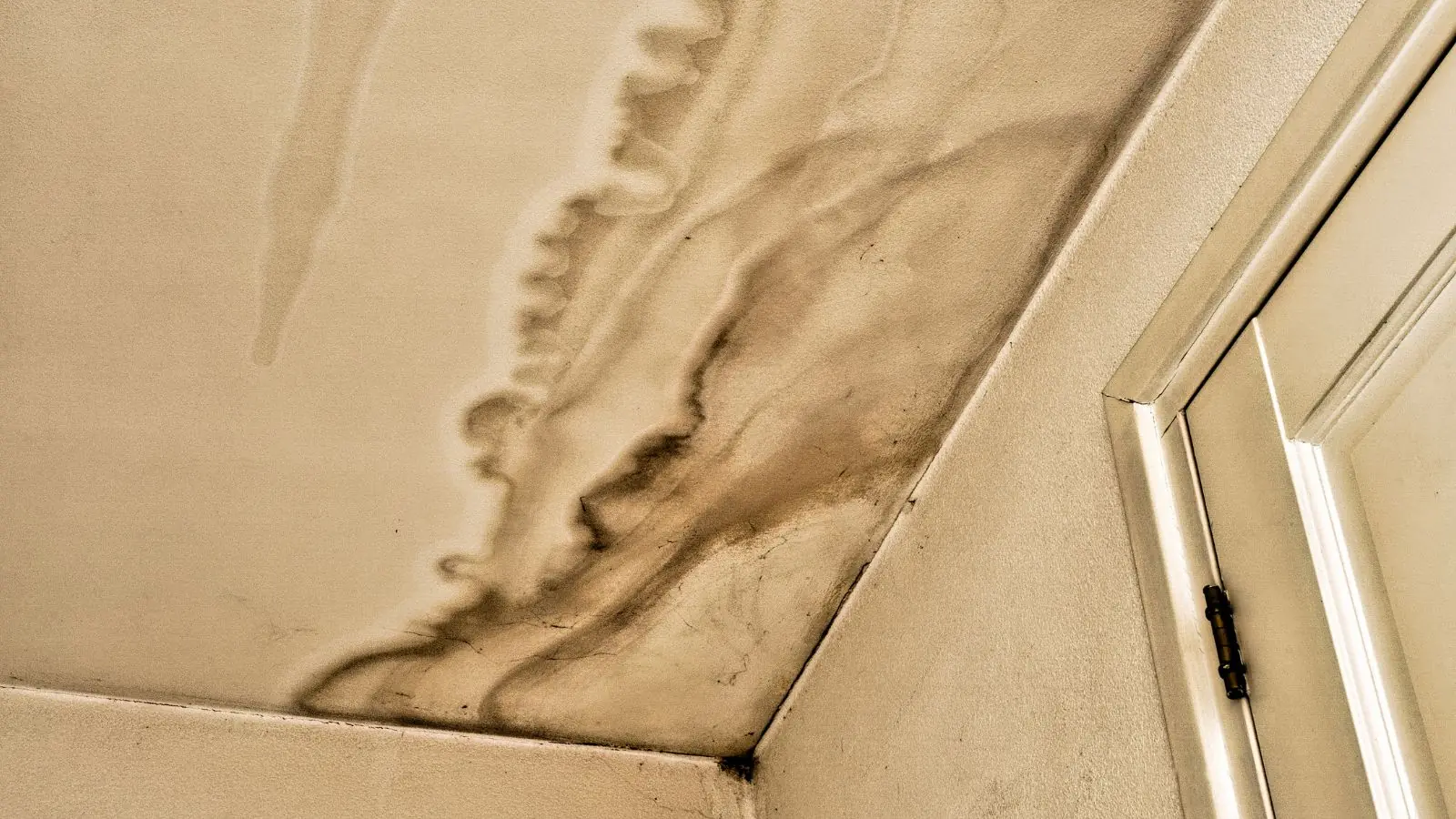
A wet ceiling is holding more water than it shows
Ceiling water damage repair covers the finished ceiling and everything above it: drywall or plaster, insulation, joists and the source overhead. A brown ring the size of a plate can sit under several gallons of trapped water. For an active drip in Maryland Heights, call (833) 521-1033. The line is answered 24/7.
Move furniture and electronics out from under the wet spot and set a bucket. If the ceiling is bulging, keep everyone out of the room. A saturated drywall panel can weigh enough to injure someone when it lets go.
Turn off the water to the fixture above if there is one. Switch off the light circuit for that room at the panel if the panel is dry and reachable. If water is running out of a light fixture, call the utility or 911 first.
When a dripping or sagging ceiling is an emergency
- The drywall is bowing, bubbling or has a soft spot you can press in
- Water is dripping steadily or running along a seam
- A light, fan or smoke detector is wet
- The stain is growing while you watch it
A dry, old stain that has not changed in months can wait for a daytime visit. Anything on the list above should not, and crews take those calls after hours and on weekends.
The usual sources above a ceiling
Callers describe the same handful of situations. An upstairs toilet that leaked onto a finished basement ceiling. A wet closet ceiling under a bathroom. A drip from the attic near the air handler. A shower drain that only leaks when someone is in it.
Layout matters here. The city's comprehensive plan describes the typical Maryland Heights house as about 40 years old with three bedrooms and two bathrooms. In two-story and split-level versions of that plan, a bathroom usually sits directly over a hallway, kitchen or family room, so a small plumbing leak shows up on a ceiling.
If the cause turns out to be the air conditioner's drain line, our AC leak water damage page covers that source. We find the source before we open anything.
Roof leaks and water damage from a leaking roof
Roof water damage follows its own path. Rain gets under a lifted shingle, a cracked pipe boot or failed flashing, runs down the underside of the roof decking, soaks the attic insulation and finally stains the ceiling several feet from where it came in. That is why the wet spot is rarely straight below the hole.
The comprehensive plan records a tornado here in 2011, after which zoning rules were relaxed for a time so that damaged houses could go back up. Wind events like that open roofs in minutes. More often the cause is slow: an aging roof on a 1970s house that leaks a little in every heavy rain.
We do not repair roofs. A roofer fixes the opening, and we handle the water damage inside: wet insulation removal, drying the decking and joists, and the ceiling repair. The city lists roof sheathing replacement among the jobs that generally need a building permit, so ask your roofer about that.
How a water damaged ceiling is repaired
- Controlled release. A bulging ceiling is drained through a small opening into a container so it does not collapse.
- Inspection. Moisture meters and thermal imaging map the wet area, which is usually larger than the stain.
- Removal. Sagging drywall and soaked insulation come out. Sound, lightly wet drywall can often stay.
- Drying. Air movers and LGR dehumidifiers dry joists and decking, sometimes with the cavity tented in plastic.
- Repair. New drywall, tape, texture match and paint.
| What you see | What it usually means | Typical repair |
|---|---|---|
| Faint ring, dry to the touch | Past leak, possibly solved | Check with a meter, then stain block and paint |
| Damp stain or peeling paint | Active or recent leak | Dry the cavity, patch or replace the panel |
| Sag, bubble or crack | Saturated drywall | Remove the section, dry framing, new drywall |
When water has run down from the ceiling into the wall below, the two repairs are done together. See wall and drywall water damage repair for that part.
Cost factors and insurance
- Size of the wet area and how much drywall is replaced
- Whether attic insulation has to be removed and replaced
- Ceiling height and texture, which affect the finish work
- Drying days needed for the framing above
Sudden leaks from plumbing or storm damage are often covered. Long-term seepage and wear on an old roof often are not. Check your policy or ask your insurer. You are told what the job involves and what it costs ahead of any work.
Ceiling stain getting bigger? Tell us the room and what is above it.
Call (833) 521-1033Ceiling repair across the area
We repair water damaged ceilings throughout Maryland Heights and the 63043 ZIP code, and in Saint Ann, Bridgeton, Hazelwood, Florissant and Earth City. Our Bridgeton page has details for homes on that side of the airport.