
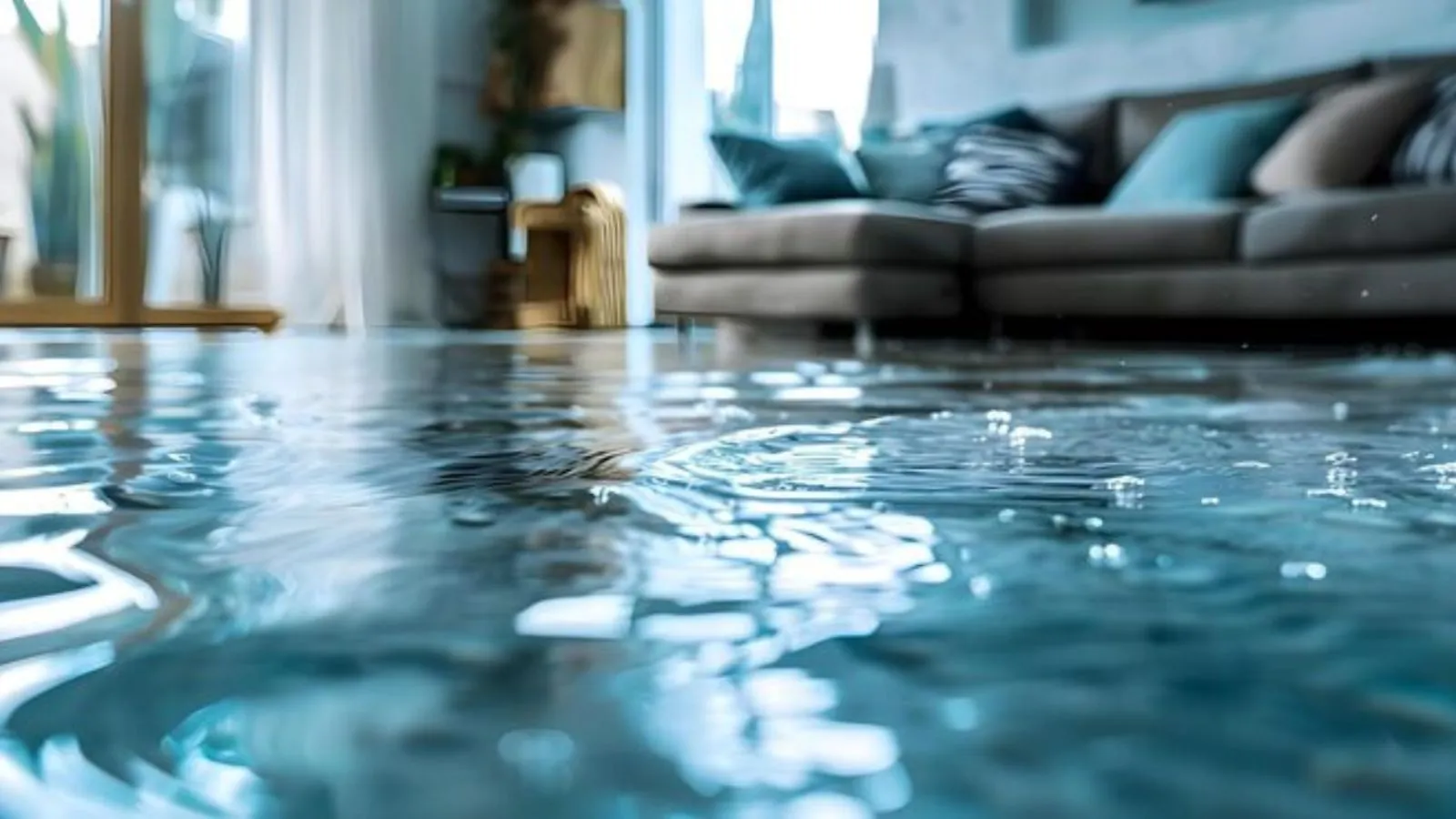
Why an empty house is the highest risk
A supply line that fails while you are in the kitchen costs you a wet floor. The same failure on day one of a week away costs you ceilings, floors and walls on every level below it.
The difference is only time. Nothing about the leak changes. So prevention while travelling comes down to two things: remove the pressure, and arrange for someone or something to notice.
The single most effective step
Close the main water shut-off valve. With the main closed, a failed hose or fitting can release only the water already in the pipes. That is a few gallons instead of a few thousand.
After closing it, open a faucet on the bottom floor for a moment to release pressure, then close the faucet. If you have an automatic ice maker, switch it off so it does not run dry.
Test the valve a week before you travel, not the morning you leave. An old valve that has not been turned in years may stick or drip at the stem.
The ten-minute checklist
| Item | Action | Why |
|---|---|---|
| Main valve | Close it | Removes supply pressure from every line |
| Water heater | Set to vacation or pilot | No point heating water nobody uses |
| Washer hoses | Close the wall taps | Hoses are the classic failure |
| Sump pump | Pour in water to confirm it runs | A stuck float is found now, not in a storm |
| Gutters and downspouts | Clear and aim away from the house | Keeps roof water off the foundation |
| Thermostat | Leave heat or cooling on | Protects pipes in winter, limits humidity in summer |
| Basement floor | Lift boxes onto shelves | Limits loss if water does come in |
If you have a boiler, a fire sprinkler system or a humidifier that needs water, ask a plumber before closing the main. Some systems need a supply at all times.
Winter trips
Never turn the heat off in winter. Set the thermostat no lower than the mid-50s Fahrenheit. Open the cabinet doors under sinks on exterior walls so warm air reaches the pipes.
Disconnect garden hoses and close the inside shut-off to outdoor faucets if your house has one. A hose left attached traps water in the faucet body, where it can freeze and split the pipe just inside the wall.
If a pipe does freeze and break while you are gone, a closed main means the thaw releases almost nothing. That is the whole argument for the valve. What happens otherwise is described on our frozen pipe water damage page.
Summer trips
Do not switch the air conditioner off entirely. Set it to the low 80s. Air conditioning removes moisture as well as heat, and a closed-up house in a humid week can grow mildew on walls and furniture.
Before leaving, check that the condensate drain is flowing. Pour a cup of water into the drain pan and watch it leave. A blocked drain will overflow into the closet or ceiling for as long as the system runs.
Summer is storm season. Walk around the outside and make sure downspouts are attached and window wells are clear.
Have someone look in
Ask a neighbor or relative to walk through every two or three days. Show them the main valve. Tell them to look at ceilings, under sinks and at the basement floor, and to listen for running water.
Many insurance policies for vacant or unoccupied homes expect regular checks, and some reduce coverage after a set number of days empty. If you will be away for weeks, ask your insurer what your policy requires.
Notes for Maryland Heights travellers
More than half of the homes in Maryland Heights went up in the 1960s and 1970s, by the city's own count. Main valves in those houses are often the original gate type, which can seize or fail to seal after decades untouched. If yours will not turn smoothly, have a plumber replace it with a quarter-turn ball valve before your next trip.
Missouri American Water supplies the city, and its 2023 report lists hardness up to 226 parts per million from the Missouri River plants. Mineral scale is one reason old valves stick. Working the valve once or twice a year keeps it usable.
Storms can arrive while you are away. Fee Fee Creek and several other channels run through residential parts of the city, and the July 2022 storm sent Fee Fee Creek past major flood stage. If your house, or a relative's in Bridgeton or Florissant, sits near a creek, raising stored items off the basement floor is worth the ten minutes.
Inexpensive technology that helps
- Leak sensors. Small battery pucks placed by the water heater, washer and under sinks. Wi-Fi versions alert your phone.
- Automatic shut-off valves. Fitted on the main line, they close when a sensor trips or flow looks abnormal.
- Braided steel washer hoses. A cheap upgrade from rubber, replaced every few years.
- Smart thermostat. Alerts you if the indoor temperature drops or humidity climbs.
None of these replaces closing the main for a long trip. They are for the everyday hours when you are simply at work.
If you come home to water
Close the main if it is not already closed. Stay out of rooms with sagging ceilings or water near outlets. Photograph everything before moving it, then call your insurer and a restoration company.
A leak that has run for days is no longer a clean-water job, and more material will need to come out. The first step is water extraction.