
The short version
Mildew is a kind of mold. In everyday use the word means the thin, flat growth that sits on damp surfaces such as shower grout, window sills and fabric. It wipes away.
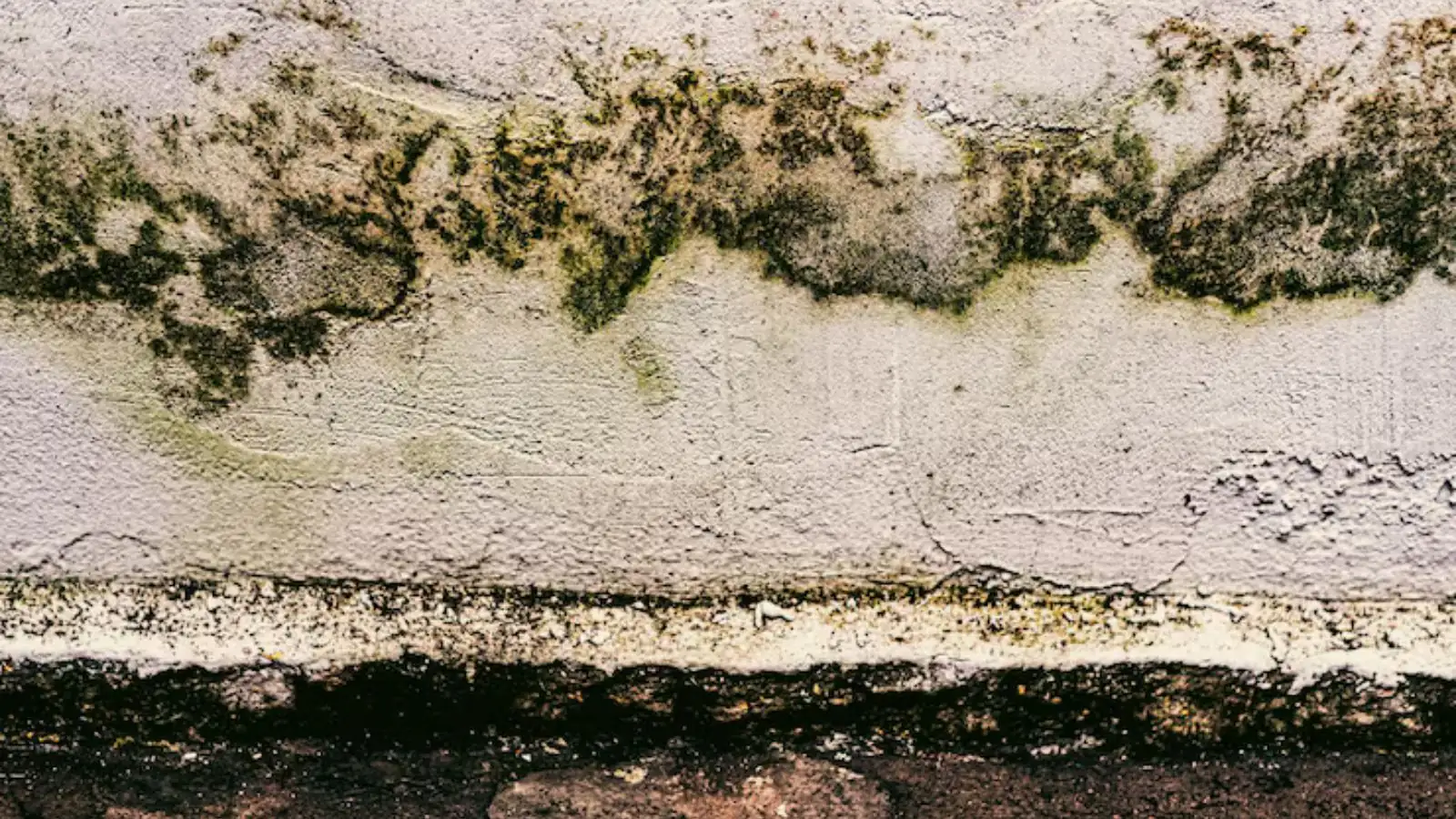
Mold, as most people use the word, is growth that has taken hold in a material. It is often raised or fuzzy, it stains, and it tends to come back because the material underneath is damp.
The useful question is not really what to call it. It is whether the moisture is only on the surface or also inside.
Side by side
| Feature | Mildew | Mold |
|---|---|---|
| Look | Flat, powdery or downy | Fuzzy, slimy or raised patches |
| Color | White, gray, later yellow or brown | Green, black, brown, sometimes orange or white |
| Where | Grout, caulk, sills, shower curtains, damp fabric | Drywall, wood, carpet backing, insulation |
| Depth | On the surface | Into the material |
| Cleaning | Wipes off with detergent | Material often has to be removed |
| Message | Humidity or condensation | A leak or lasting dampness |
Color is the least reliable row. Black growth is not automatically a particular species, and white growth is not automatically harmless. Texture and location tell you more.
Three checks you can do in a minute
- Wipe it. Dampen a cloth with detergent solution and wipe. Mildew comes off and leaves a clean surface. Mold smears, leaves a stain or reveals damage.
- Press it. Push on the surface. Tile and sound paint feel solid. Drywall with mold behind it often feels soft.
- Smell it. A persistent musty odor, especially low on a wall or in a closet, suggests growth you cannot see.
If the wall gives when you press, the issue is inside it. Our page on wall and drywall water damage describes what is usually found.
Dealing with mildew
Mildew is a housekeeping matter. Scrub grout and caulk with a bathroom cleaner or detergent, rinse and dry. Wash fabrics hot and dry them fully. Replace caulk that has gone black beneath the surface.
Then lower the humidity. Run the bath fan during showers and for 20 minutes afterward. Squeegee shower walls. Leave the curtain spread open so it can dry. Keep indoor relative humidity under about 50 percent in summer.
If mildew returns within days however you clean, the room is not drying between uses. Look at the fan.
Dealing with mold
Start by finding the water. Check above, behind and below the spot: a bathroom overhead, a supply line in the wall, a window, the roof, the air conditioner's drain. Until that is fixed, cleaning is temporary.
Small patches on hard, sound surfaces can be cleaned by a healthy adult wearing gloves, goggles and an N95 respirator. Growth in drywall, carpet, insulation or ceiling tile means that material is removed.
Larger areas, hidden growth and anything following a flood call for containment so spores are not spread through the house.
What Missouri health officials say
Missouri's state health department takes a practical line that fits this topic well. It says the type of mold makes no difference to how it is cleaned up, and that the word toxic is an inaccurate description of so-called black mold. In other words, identifying the exact organism matters far less than removing it and the moisture.
It also says that when growth is visible, sampling is unnecessary in most cases. A Maryland Heights homeowner looking at spots on a bathroom ceiling does not need a lab to decide what to do.
Humidity is the local factor. St. Louis area summers are muggy, and houses in Maryland Heights, Bridgeton and Saint Ann that rely on older bath fans or none at all will see mildew every July. That is condensation, and a better fan is the cure.
Common mix-ups
- Efflorescence. White, crystalline powder on basement concrete or brick is mineral salt left by evaporating water. It dissolves in water. Mold does not. It still tells you moisture is coming through the wall.
- Soot and dust. Dark streaks at ceiling edges or around vents are often dust settling where air moves or surfaces are cold.
- Tannin stains. Brown rings on a ceiling are usually water stains from a leak, not growth. See ceiling water damage repair.
Each of these still points to moisture or airflow worth understanding. None is cured by spraying it.
When either one needs a professional
Mildew almost never does. Mold does when it covers more than a few square feet, sits in porous building materials, keeps returning, or followed contaminated water.
We do not give health advice. If someone in the house has symptoms they link to the home, they should speak with a physician.