
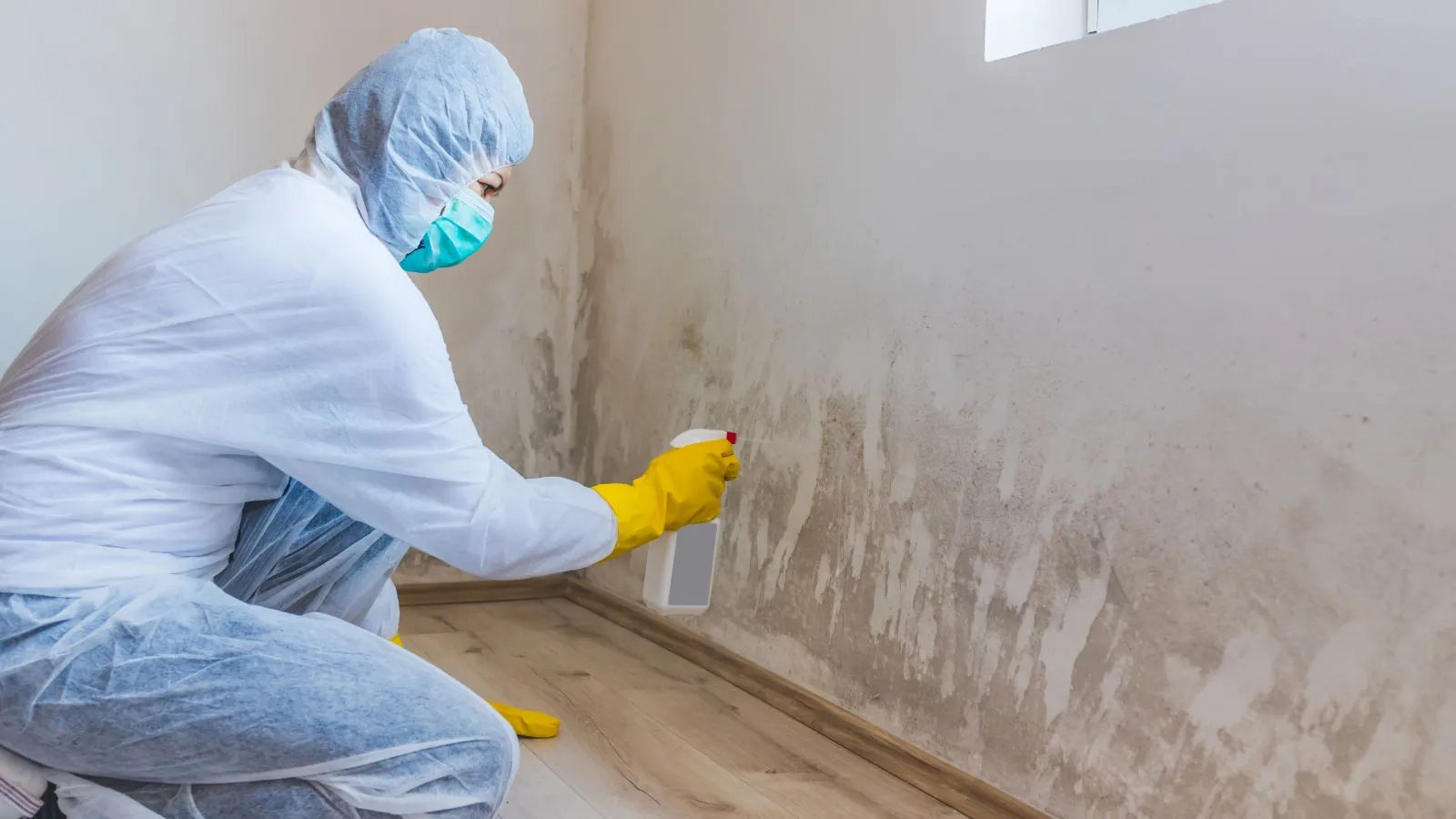
First, decide what kind of problem you have
Mold on a wall is one of two things. It is either growth on the surface, feeding on dust and soap film where moisture condenses. Or it is the visible edge of growth that started inside the wall because something leaked.
The first is common in bathrooms and behind furniture on cold exterior walls. You can usually clean it yourself. The second needs the leak fixed and the damaged material removed. Cleaning the face of the wall does nothing for it.
A quick test
| Check | Points to surface growth | Points to a wall problem |
|---|---|---|
| Press the wall | Firm | Soft, crumbly or swollen |
| Paint | Intact | Bubbling, peeling or stained brown |
| Location | Shower area, window corner, behind a dresser | Below a bathroom, near plumbing, under a window |
| After cleaning | Stays away with better airflow | Returns in the same spot in weeks |
| Smell | Faint or none | Musty, stronger near the baseboard |
If you land in the right-hand column, stop here and find the water source. Our page on wall and drywall water damage explains what is happening inside.
What you need for a small surface job
- Rubber gloves and eye protection
- An N95 respirator
- A bucket of warm water with dish detergent
- Disposable cloths or a sponge you will throw away
- A fan in a window blowing outward, or an open window
Detergent and water are enough for painted walls. Never mix bleach with ammonia or other cleaners. If you do use a diluted bleach solution, ventilate well and keep it off fabrics.
Cleaning steps
- Move furniture away and cover the floor with plastic.
- Lightly mist the area with water so spores are not brushed into the air.
- Wipe with the detergent solution, working from the clean edge toward the center.
- Rinse with a clean damp cloth.
- Dry the wall fully with a towel and airflow.
- Bag the cloths and gloves and take them outside.
Do not dry-scrub or sand moldy paint. That releases what you are trying to remove. Do not paint over it either. Paint applied over growth peels, and the stain returns.
When to stop and call someone
Size is a reasonable guide. A patch you could cover with a bath towel is a household job for a healthy adult. Several patches, a whole wall, or anything that keeps returning is not.
- The drywall is soft or damaged
- The area is larger than a few square feet
- It came back after you cleaned it
- It followed a flood or sewage backup
- Someone in the home has asthma or a weakened immune system
We do not give medical advice. If anyone in the house has symptoms they connect with the home, a physician is the right person to ask.
Mold on walls in Maryland Heights houses
Missouri's Department of Health and Senior Services says sampling is seldom needed once you can see the growth. It adds that the cleanup approach does not depend on which mold it is. So you do not need a lab report before wiping down a bathroom wall.
Housing age is relevant here. The city's figures show 53.1 percent of Maryland Heights housing was built between 1960 and 1979. Bathrooms from those decades often have small or no exhaust fans, and some vent into the attic instead of outdoors. If your bathroom wall keeps spotting, check where the fan actually goes.
The state health department also advises tenants with mold problems to look to Missouri's landlord-tenant resources and their city hall or housing authority. That applies equally to renters in Saint Ann and Hazelwood.
Fix the reason it grew
Mold needs moisture. On bathroom walls that usually means steam with nowhere to go. Run the exhaust fan during showers and for 20 minutes after. If there is no fan, open the window or the door.
Behind furniture, pull pieces a few inches off exterior walls so air can move. In a damp lower level, a dehumidifier set around 50 percent relative humidity makes a clear difference.
If the cause was a leak, the wall cavity has to be dried, which is the job of structural drying. No cleaner replaces that.
After you clean: how to tell it worked
Mark the edge of the cleaned area lightly in pencil and note the date. Look again after two weeks and after a month. A wall that stays clean and firm was a surface problem, and you have solved it.
Regrowth inside the pencil line means moisture is still reaching that spot. Check the other side of the wall and the room above before cleaning it a second time. A humidity gauge costs a few dollars and will tell you whether the room is simply too damp.