
Step 1: prove there is a leak with the meter
Turn off every tap and water-using appliance in the house. Make sure the washer, dishwasher and ice maker are idle. Then look at your water meter.
Most meters have a small leak indicator, a triangle or star that spins with any flow. If it is moving with everything off, water is going somewhere. No indicator? Write down the reading, use no water for an hour, and read it again.
This test covers the pressurized supply side. It does not detect drain leaks, roof leaks or condensation, which only appear when a fixture or the weather is involved.
Step 2: split the house in half
Close the main shut-off valve inside the house and check the meter again. If the indicator still moves, the leak is between the meter and the house, in the buried service line. If it stops, the leak is indoors.
Next, close the cold inlet valve on the water heater and repeat. If the leak stops, it is on the hot side. A hot-side leak under a slab often shows up as a warm patch of floor.
Step 3: check toilets first
Toilets are the most common hidden leak, and they make no mess. Put a few drops of food coloring in the tank. Wait fifteen minutes without flushing. Color in the bowl means the flapper is letting water through.
A leaking flapper wastes water but does not damage the house. Fix it, then run the meter test again to see whether anything remains.
Step 4: search with your senses
| Sense | What to look for | Where |
|---|---|---|
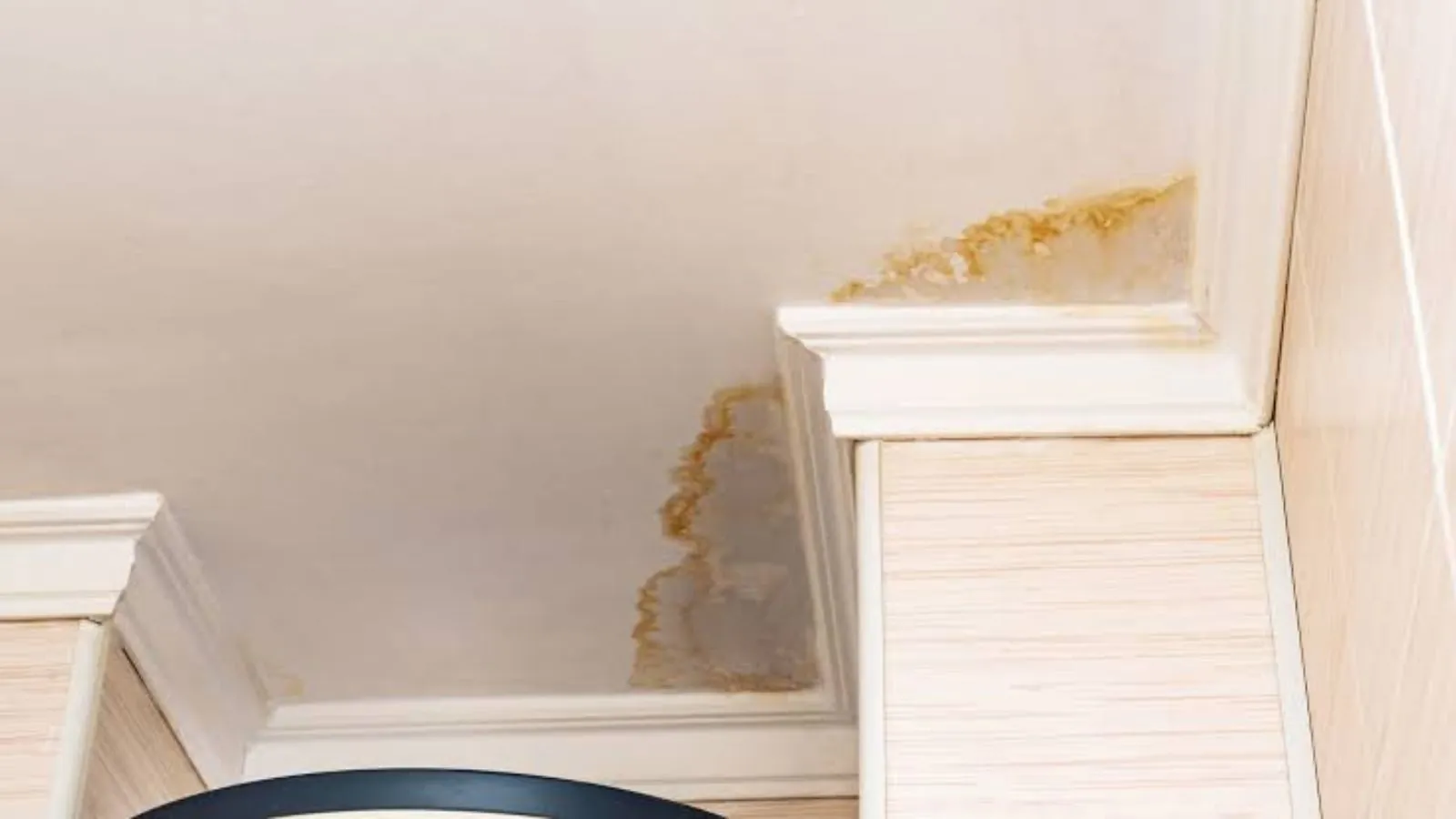
| Sight | Stains, bubbling paint, warped baseboard, cupped floorboards | Ceilings below bathrooms, walls behind fixtures |
| Touch | Soft drywall, warm or damp floor, loose tile | Around tubs, toilets, under sinks |
| Smell | Musty odor that is stronger in one spot | Closets, sink cabinets, basement corners |
| Hearing | Hissing or dripping with all water off | Quiet house, ear to the wall |
Go at night when the house is quiet. Open every sink cabinet and feel the bottom panel. Pull the washer and refrigerator forward and look at the floor behind them.
Step 5: test the drains and the shower
Supply leaks run all the time. Drain leaks only run when you use the fixture. Fill a sink or tub, then pull the plug while a helper watches the ceiling below or the pipes under the cabinet.
For a shower, the leak is often at the door, the valve trim or failed grout, not in the pipes. Run water directly down the drain for five minutes with nothing splashing the walls. Then spray the walls and door. Which test produces the drip tells you which part is at fault.
Step 6: look up and look out
A stain that grows after rain is a roof, flashing, window or siding leak. Check the attic with a flashlight during or just after a storm and look for dark, wet wood.
A stain that appears only in summer near the furnace closet is probably the air conditioner's condensate drain. We cover that on the AC leak water damage page.
Outside, look for a patch of lawn that is greener or soggier than the rest between the meter and the house. That can mark a leaking service line.
Leak hunting in Maryland Heights
Water here is supplied by Missouri American Water, according to the city's utilities page. If your test points to the buried line or the meter itself, their customer number is 1-866-430-0820. Ask them which part of the service line is yours before you hire anyone to dig.
The utility's 2023 water quality report gives total hardness from its Missouri River plants as 82 to 226 parts per million. Water at the upper end leaves white scale. A crusty white or green deposit on a pipe joint or valve stem is a sign that the fitting has been weeping and evaporating for some time, even if it is dry when you look.
For drains that leak or back up outside the house, the city handles sewer lateral questions at (314) 291-6550. The same meter test works in Hazelwood and Florissant, where Missouri American Water has been replacing aging mains.
What professionals add
A plumber can pressure-test lines and use acoustic equipment to pinpoint a leak inside a wall or under a slab before opening anything.
A restoration company comes at it from the other side. A thermal imaging camera shows cool, damp areas on walls and ceilings, and a moisture meter confirms them. That maps where the water has travelled, which usually leads back to the source. It also shows how much needs drying once the leak is fixed.
If the search ends at a concrete floor, read about slab leak water damage next.